Viral warts (papillomas)
Benign skin lesions caused by the HPV virus, which can be removed under local anaesthesia with a CO2 laser or radiofrequency.
What it is
Viral papillomas are benign lesions that appear as a result of infection with the HPV virus. Some HPV strains are associated with an increased risk of cancer, particularly in the gynaecological area, but also in the ear, nose and throat area; not all strains, however, can lead to neoplasia, and the strains involved in the development of papillomas and warts are among those that do not.
After infection with a strain that has an affinity for the skin, the virus remains dormant in the keratinocytes, that is, in the skin. When conditions are favourable, it reactivates and forms lesions. These are viral reservoirs, and autoinoculation is common.
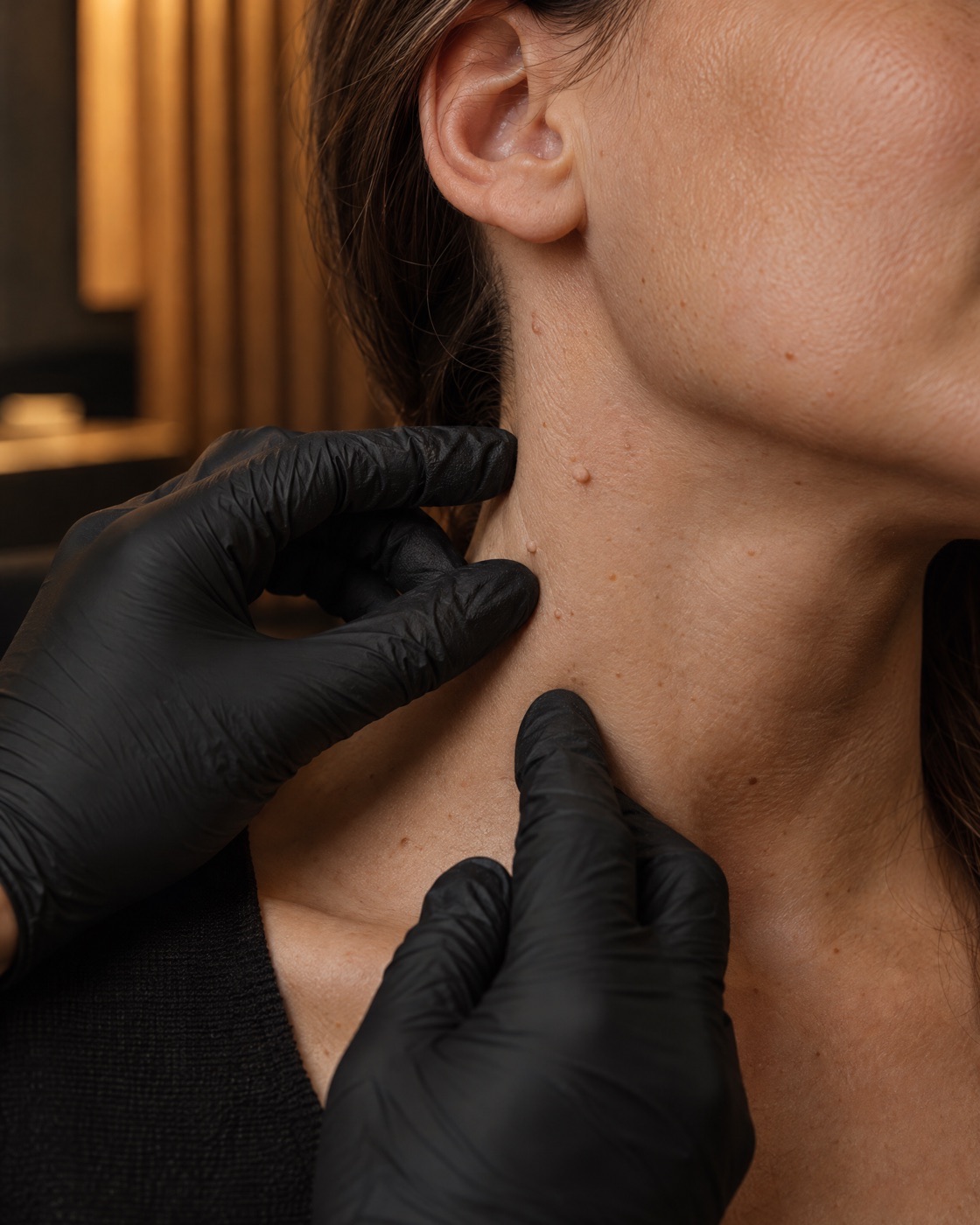
Papillomas are pedunculated, skin-coloured lesions located on the neck, eyelids, armpits and groin and, in women, also in the area under the breasts. They are usually asymptomatic or may be accompanied by itching; they can regress spontaneously, but can be bothersome because they are frequently injured and may bleed.
- papillomas on the neck, eyelids, armpits, groin or under the breasts
- lesions that are frequently injured or that bleed
- reducing the risk of autoinoculation and transmission
How it works
- 01
Local anaesthesia
The papillomas are removed under local anaesthesia.
- 02
Removal of the lesions
The papillomas are removed with a CO2 laser or by radiofrequency.
- 03
Healing
Superficial burns remain where the lesions were; these heal in 5–7 days.
Good to know
- Removing the papillomas does not eliminate the virus from the body: it remains dormant in the skin and can reactivate during a person's lifetime, for example at times of stress, lowered immunity, pregnancy or excessive sun exposure.
- HPV infection is classed as a sexually transmitted infection; condoms do not stop transmission of the virus.
- The virus can be transmitted through skin-to-skin contact and from mother to child during birth.
- HPV vaccination is the main method of preventing the spread of the virus.
- Removing lesions from the skin or mucous membranes eliminates the viral reservoirs and, with them, the risk of autoinoculation and of transmission to other people.
- The appearance of lesions in the genital area should be followed by genotyping, which identifies the viral strains present and guides the treatment strategy.
Frequently asked questions
Are viral papillomas dangerous?
Generally, no. They are benign lesions, but certain HPV strains may be associated with an oncological risk, especially in the genital area, which is why medical assessment is important.
Are papillomas easily transmitted?
Yes. The HPV virus is transmitted through skin-to-skin contact, including sexual contact. Autoinoculation is common, so the lesions can spread to other areas of the body.
Does removing the papillomas eliminate the virus from the body?
No. The treatment removes only the visible lesions. The virus remains dormant in the body and can reactivate under certain conditions.
Can papillomas come back after treatment?
Yes, this risk exists, especially at times of lowered immunity, stress or hormonal imbalance.
How can papillomas be prevented?
HPV vaccination is the main method of prevention. In addition, removing the lesions reduces the risk of spread and of autoinoculation.
Appointments are made by phone only, Monday to Friday, between 10:00 and 18:00.