Dermoscopy
Dermoscopy is a non-invasive, painless examination that gives an indication of the nature of lesions, without establishing a definitive diagnosis.
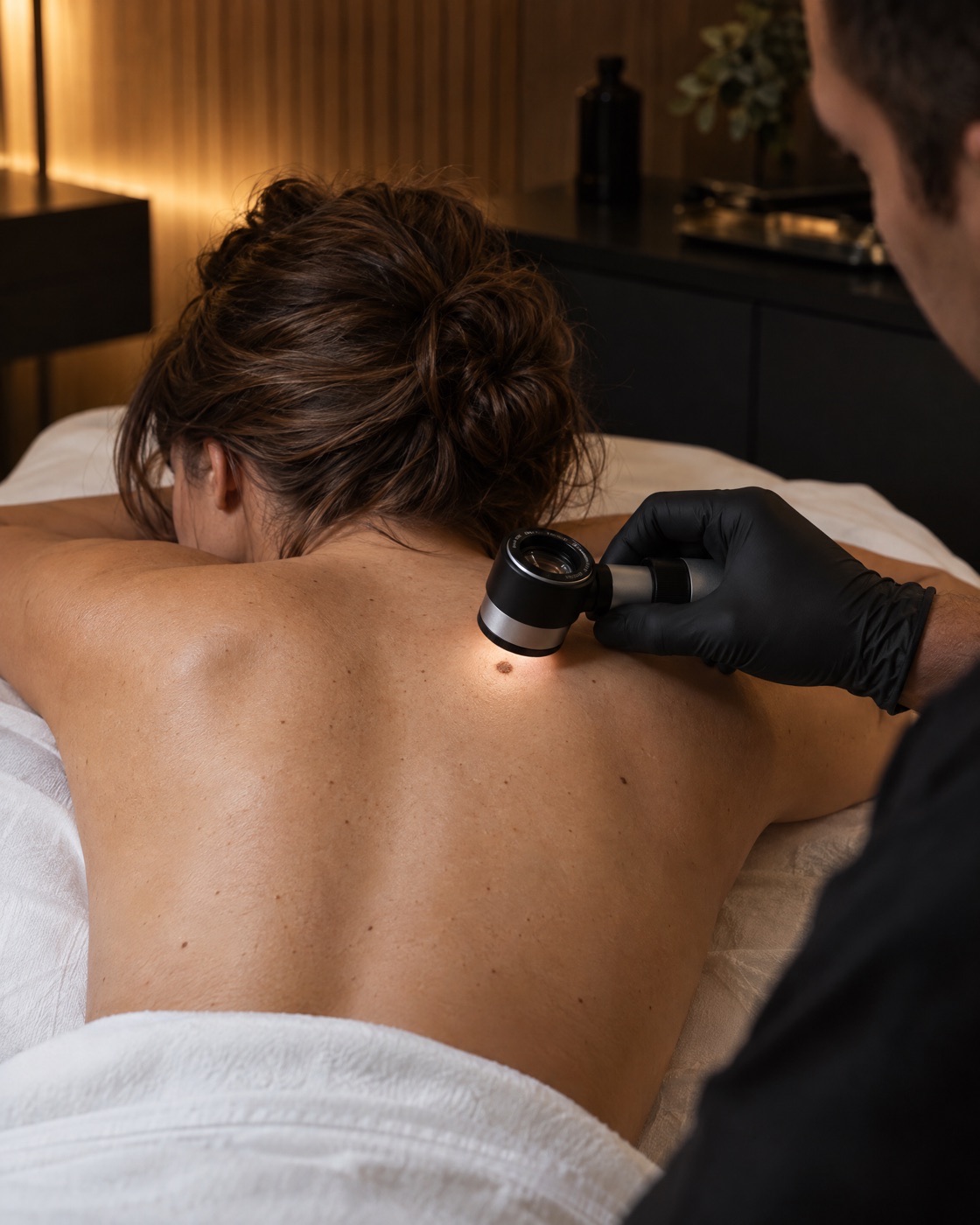
What it is
Dermoscopy is a non-invasive, painless examination that gives an indication of the nature of lesions, without establishing a definitive diagnosis.
Dermoscopy allows moles and other skin lesions to be assessed, helping with the early detection of skin cancer, including melanoma.
- annual mole check
- changes in an existing lesion
- appearance of new lesions
- prolonged exposure to the sun or sunbeds
- history of skin cancer
How it works
- 01
Preparation
Dermoscopy requires no special preparation. The area examined should be clean, free of make-up or cosmetic products that could make it harder to assess the lesions.
- 02
Examination
The doctor examines moles and other pigmented or non-pigmented lesions with a dermatoscope, an instrument that gives a magnified view of skin structures that are invisible to the naked eye.
- 03
Assessment of the lesions
The shape, symmetry, colour, borders and specific structures of the skin lesions are analysed, to identify any signs of atypia or suspected malignancy.
- 04
Recommendations
Depending on the dermoscopic appearance, the doctor may recommend periodic monitoring, photographing the lesions for later comparison, or surgical excision of suspicious ones, followed by histopathological examination.
Good to know
- Dermoscopy is a non-invasive, painless examination that gives an indication of the nature of lesions, without establishing a definitive diagnosis.
- Dermoscopy allows moles and other skin lesions to be assessed, helping with the early detection of skin cancer, including melanoma.
- A dermatological assessment is recommended for lesions that change in shape, size, colour or appearance.
- People with many moles, a personal or family history of melanoma, or excessive sun exposure may need regular dermatological monitoring.
- Dermoscopy helps to distinguish benign lesions from suspicious ones, but it does not replace histopathological examination when this is indicated.
- How often check-ups are needed is decided individually, according to risk factors and the appearance of the lesions.
Appointments are made by phone only, Monday to Friday, between 10:00 and 18:00.