Topical antifungals
The first line of treatment, although this is not a fungal infection. Malassezia species break sebum down into free fatty acids, which irritate the skin; reducing the activity of these fungi calms the inflammatory process.
Chronic condition of the seborrhoeic areas, with reddish patches covered by yellowish scales, which progresses in flare-ups.
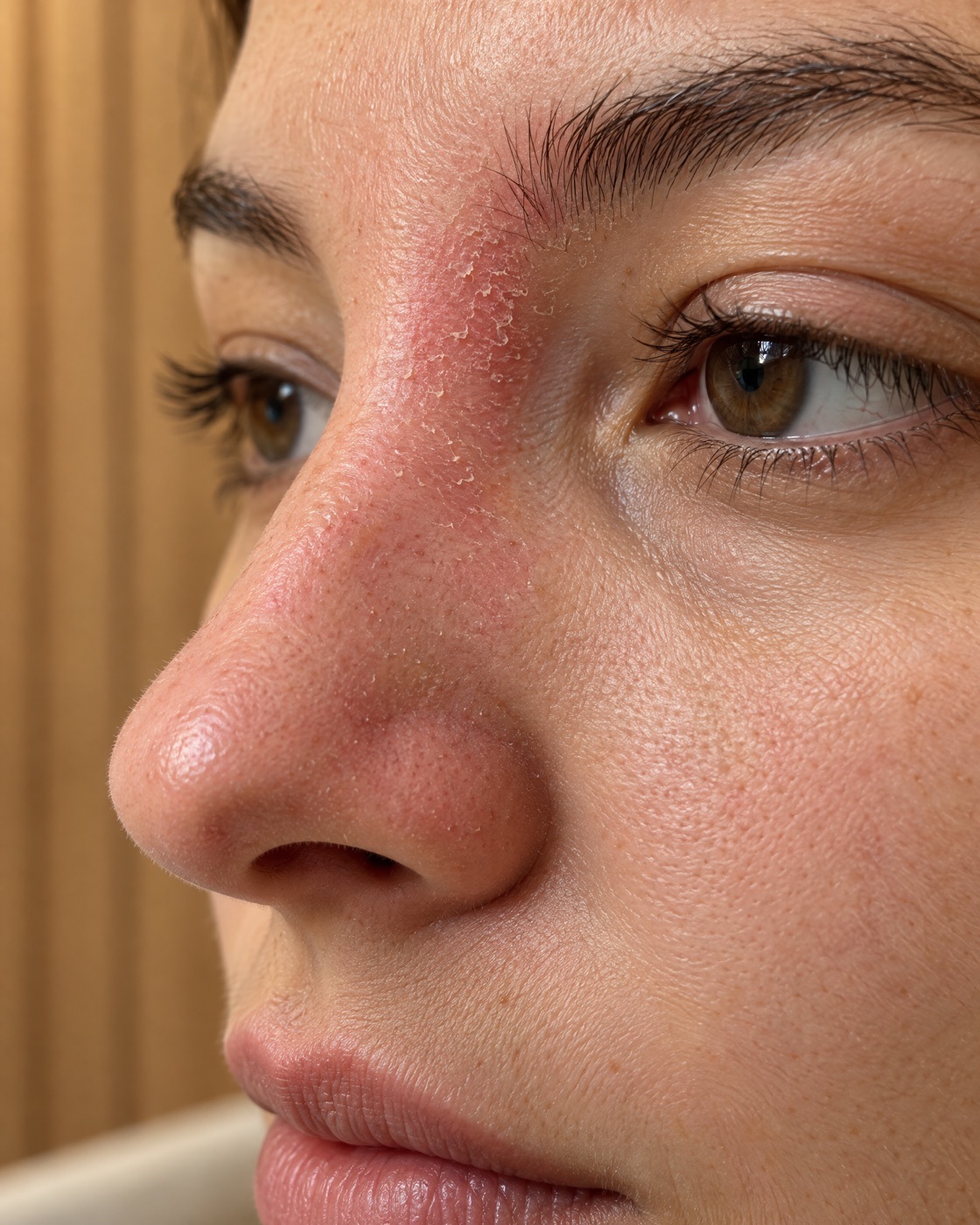
Seborrhoeic dermatitis is a chronic condition that appears on the seborrhoeic areas: the face, scalp and front of the chest. It presents as reddish patches, sometimes inflamed, which may be covered by yellowish scales and may be accompanied by a burning or itching sensation. It progresses in flare-ups: periods of worsening, usually in autumn and spring, alternate with periods of remission, and the condition tends to settle in the warm season.
Factors contributing to its onset are increased sebum production, the presence on the skin of a yeast, Malassezia, which triggers an inflammatory process, and individual susceptibility: genetic predisposition, immune status and response to stress. Malassezia is found on the skin of most people; this is not an infection, but an abnormal immune response to the presence of this yeast.
Seborrhoeic dermatitis usually appears at puberty and can persist into adulthood; the number of cases decreases in older people. Cases appear to be more severe in men.
The first line of treatment, although this is not a fungal infection. Malassezia species break sebum down into free fatty acids, which irritate the skin; reducing the activity of these fungi calms the inflammatory process.
Can be used short term, in certain cases.
Work by exfoliating the skin.
Rebalance the inflammatory response locally.
Appointments are made by phone only, Monday to Friday, between 10:00 and 18:00.