Sun allergy
A photosensitivity reaction involving the immune system, triggered by sun exposure in the presence of sensitising substances.
What it is
Sun allergy belongs, together with phototoxic reactions, to a group of skin conditions called photosensitivity reactions.
Phototoxic reactions occur when a chemical substance, for example a medicine applied topically or given systemically, causes, on contact with UV radiation, a skin reaction resembling an allergy or a burn. They can occur in anyone, genetic predisposition is not relevant, and the reaction is dose-dependent, for both the chemical agent and the UV radiation. They start a few hours after exposure, and the lesions are strictly confined to the area that came into contact with the causative agent.
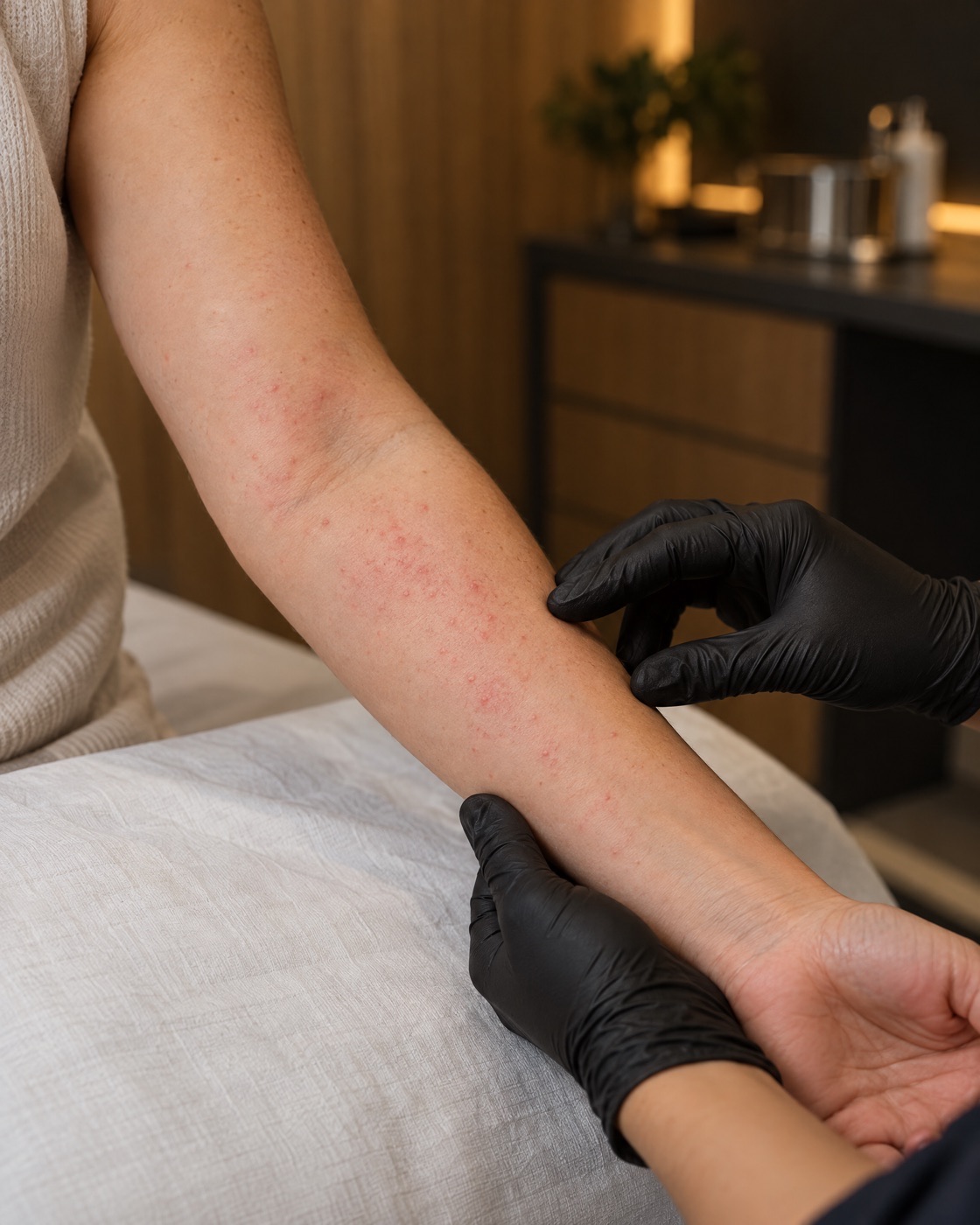
Photoallergic reactions involve the immune system and occur only in certain people, with a genetic predisposition. They are not dose-dependent, the lesions can extend beyond the exposed areas, and they do not occur on first exposure: a prior exposure is needed, during which the body becomes sensitised. Sun allergy can present as reddish lesions accompanied by pruritus, sometimes resembling urticaria, which may be covered by scales or vesicles.
- reddish lesions after sun exposure
- pruritus
- lesions resembling urticaria, scales or vesicles
- photosensitivity reactions
Good to know
- Substances that can induce photoallergic reactions: certain classes of antibiotics, thiazide diuretics, tricyclic antidepressants, non-steroidal anti-inflammatory drugs and certain components of perfumes or cosmetic products.
- Avoiding sun exposure and using SPF products are important in preventing sun allergies.
- Prevention also includes avoiding the most common causative agents.
Appointments are made by phone only, Monday to Friday, between 10:00 and 18:00.