Derma V laser
Used for inflammatory acne and post-acne scars. It targets inflamed blood vessels, to reduce redness and inflammation, and involves no downtime.
Assessment and non-invasive treatments for active acne, pigmented marks and post-acne scars.
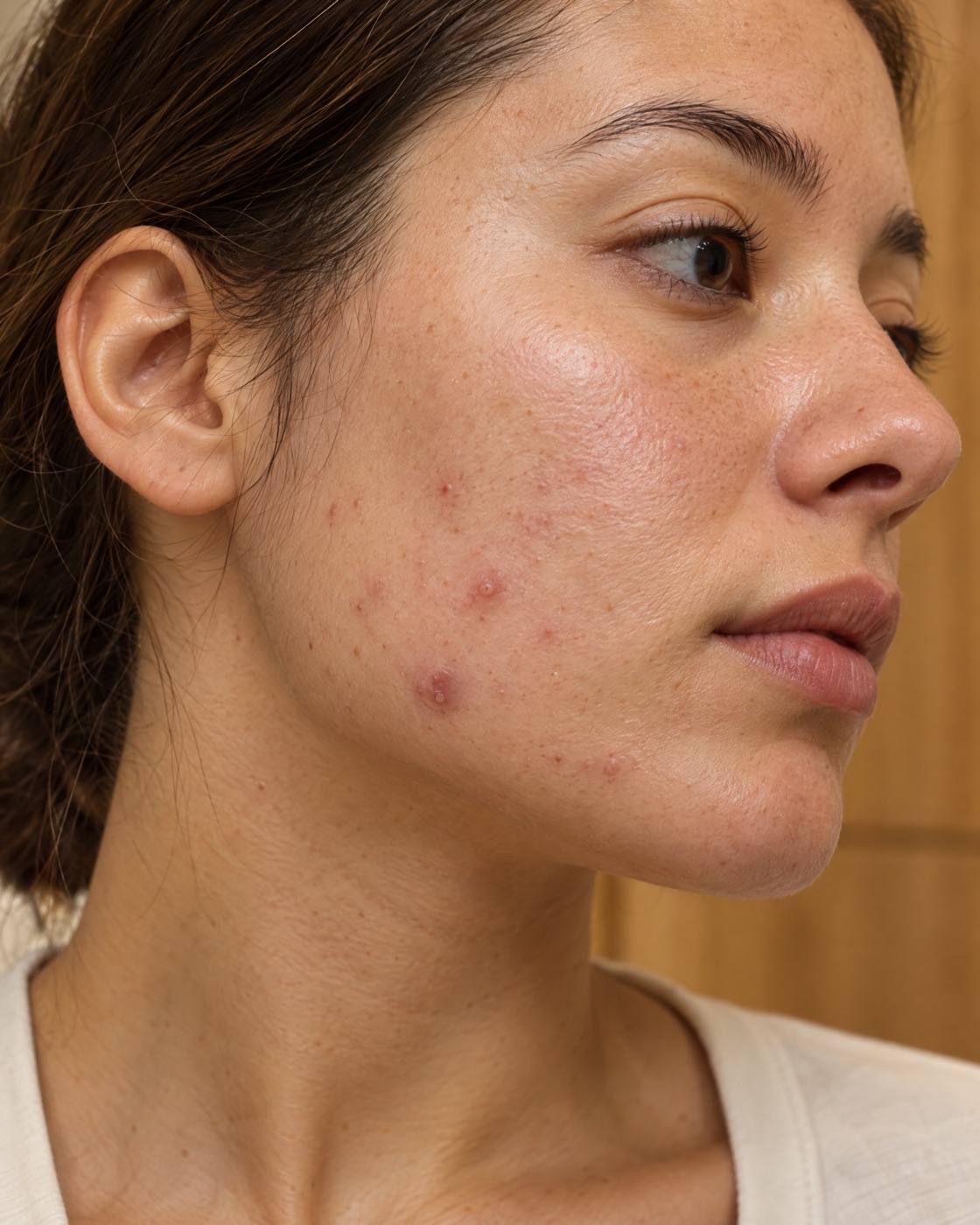
Acne is an inflammatory skin condition that affects the sebaceous glands and hair follicles. It presents as blackheads and whiteheads, papules, pustules and, in severe forms, nodules or cysts. It is common in adolescents, but also occurs in adults.
It can be triggered by hormonal fluctuations, excess sebum, the bacterium Propionibacterium acnes, genetic predisposition, stress and a diet high in sugar and fat. Juvenile acne is mainly related to puberty, while adult acne occurs more often in women, associated with pregnancy, the menopause or contraceptives.
Treatment is decided individually, according to skin type and the severity of the acne. The treatments available are non-invasive and target inflammation, active lesions, pigmentation and the scars left by acne. Timely treatment matters, because severe forms can leave permanent scars.
Used for inflammatory acne and post-acne scars. It targets inflamed blood vessels, to reduce redness and inflammation, and involves no downtime.
Used for active acne lesions and post-acne pigmentation. It acts in the deep layers of the skin, targeting the bacteria involved in acne and stimulating cell regeneration.
A superficial laser peel that targets the marks left by acne, skin texture and inflammation. It stimulates collagen production and involves no downtime.
Deep cleansing of the pores and removal of dead cells, with simultaneous application of hydrating serums. It addresses acne and post-acne scars, with no downtime.
Uses the patient’s own plasma to stimulate collagen production and skin regeneration. It targets post-acne scars and skin texture.
Deep cleansing of the pores and hydration of the skin, for mild to moderate acne. It takes approximately 30 minutes and involves no downtime.
The diagnosis is usually made by examining the skin. In severe or unusual cases, additional tests may be needed to rule out other skin conditions.
The main causes of the acne are sought, and the skin type and the severity of the lesions are assessed.
The treatment or combination of treatments suited to your case is chosen.
Non-inflammatory lesions are blackheads (open comedones) and whiteheads (closed comedones). Inflammatory lesions are papules, pustules, nodules and cysts; nodules and cysts can leave permanent scars.
Adolescents, people going through hormonal changes (pregnancy, menopause, menstrual cycle) and those with a family history of acne.
Appointments are made by phone only, Monday to Friday, between 10:00 and 18:00.