Blepharoplasty (eyelid surgery)
A surgical procedure on the upper and/or lower eyelids, in which excess skin and fat are removed.
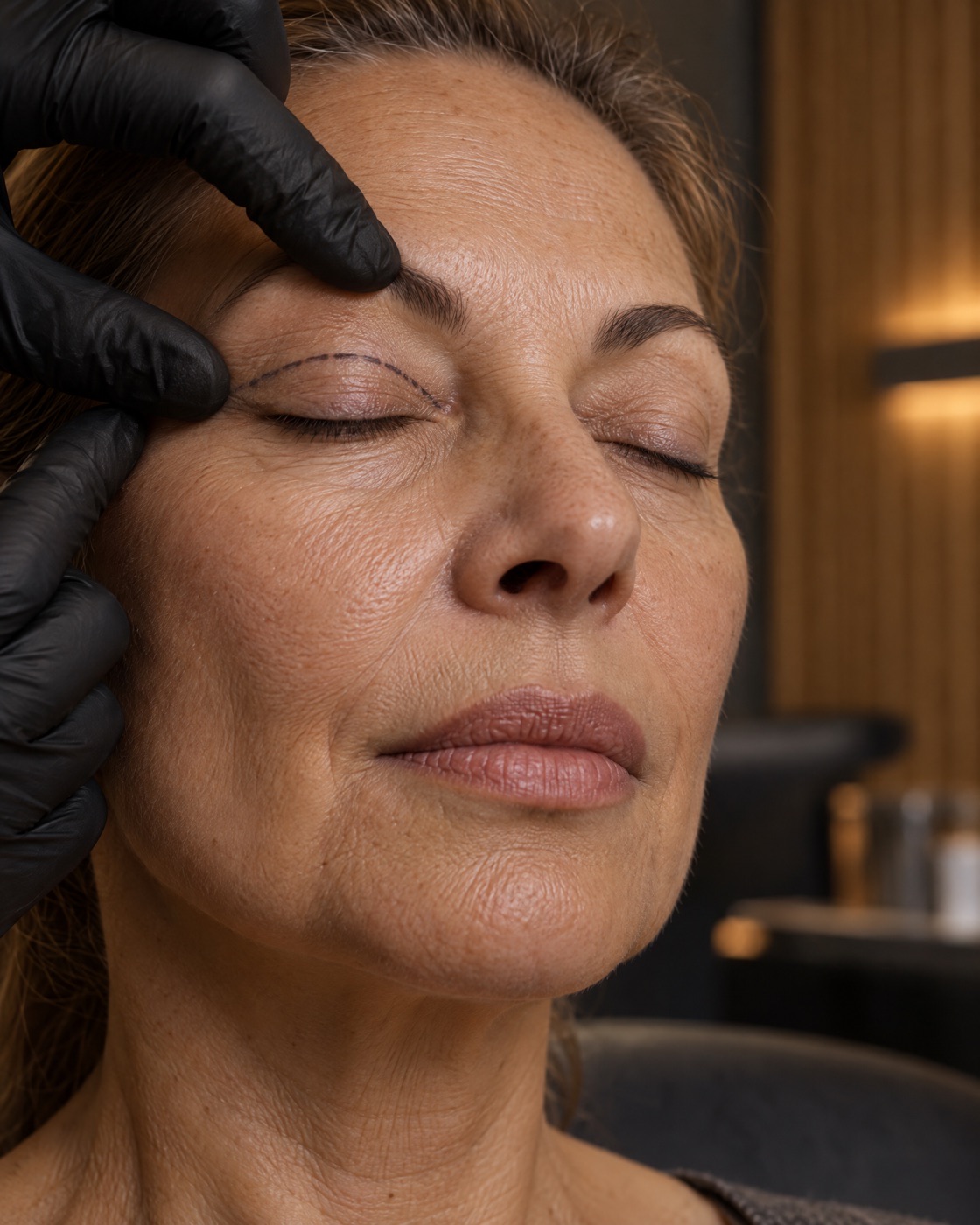
What it is
Blepharoplasty is the surgical procedure that addresses drooping eyelids and often involves removing excess skin and fat. With advancing age, the muscles and skin lose tone, and the skin of the upper and lower eyelids sags; in the area under the eyes, sagging skin contributes to the appearance of “bags under the eyes”.
Severely sagging skin around the eyes can reduce side (peripheral) vision, especially in the upper and outer part of the visual field. Removing the excess tissue from the upper eyelid can reduce or eliminate these vision problems.
The procedure can be performed on the upper eyelid, the lower eyelid or both. Subtle incisions are made, through which the excess fat and skin are removed, then the incisions are closed with sutures. For the upper eyelid, the incision is placed in the eyelid crease, and for the lower eyelid, in the lash area. The procedure is performed with radiofrequency, under local anaesthesia, and takes no more than one hour. It can be combined with a brow lift, a facelift or non-surgical rejuvenation procedures.
- drooping lower eyelids or lower eyelids with the appearance of “bags under the eyes”
- excess skin on the upper eyelids that interferes with peripheral vision
- excess skin on the lower eyelids
- drooping eyelids that prevent the eyes from opening fully
- upper eyelids that pull the lower eyelids down
How it works
- 01
Consultation
Expectations and medical history (previous procedures, health problems, allergies, medication) are discussed, a physical examination of the area is carried out and the type of procedure is chosen. Photographs are taken for later comparison; they are used publicly only with the patient’s consent.
- 02
Preparation
Aspirin, ibuprofen, naproxen and any other medicines or herbal supplements associated with increased bleeding are stopped. Smoking is stopped a few weeks before surgery.
- 03
The procedure
Under local anaesthesia, with radiofrequency, the excess fat and skin are removed through incisions placed in the upper eyelid crease or in the lash area, then the incisions are closed with sutures. It takes no more than one hour.
- 04
After the procedure
No hospital stay is needed. Rest for 2–3 days, eye drops and sleeping with the head slightly raised are recommended; discomfort is treated with the prescribed medication.
- 05
Suture removal
5–7 days after the procedure.
Good to know
- After surgery, the eye area may be swollen and bruised and some discomfort may occur; the oedema and bruising subside within 10–14 days.
- In the first days, the eyes tire more easily and there may be a need to sleep more.
- Possible risks include: infection and bleeding, dry or irritated eyes, difficulty closing the eyes or other eyelid problems, visible scars, injury to the eye muscles, skin discolouration, the need for a further procedure, temporarily blurred vision or, rarely, loss of vision, as well as the general risks of any procedure (reaction to anaesthesia, blood clots).
- The extent to which these risks apply to each patient is assessed at the consultation, according to lifestyle, medical history and genetic profile.
- Blepharoplasty is not recommended for people with psychological problems, dry eyes, active scarring inflammatory skin conditions (for example eczema or psoriasis) or a history of surgical procedures with multiple revisions.
- Smoking can reduce the ability to heal after surgery.
- For changes to the whole face, other procedures, surgical or non-surgical, may also be needed.
- The results of aesthetic procedures vary from one person to another.
Frequently asked questions
What is blepharoplasty?
A surgical procedure that corrects excess skin and fat in the upper and/or lower eyelids.
How long does recovery take?
Recovery takes 2–3 weeks. Oedema and bruising disappear within 10–14 days, light everyday activities can be resumed after 5–7 days, and strenuous physical activity is avoided for 3 weeks.
What is operated on in upper blepharoplasty?
Excess skin and, where applicable, excess fat are removed from the upper eyelid.
Where are the scars placed?
In the natural folds of the eyelids: in the crease of the upper eyelid, and in the lash area for the lower eyelid.
Appointments are made by phone only, Monday to Friday, between 10:00 and 18:00.