SVF · Stromal Vascular Fraction
A cell fraction obtained from the patient's own adipose tissue, used in regenerative medicine to support tissue quality.
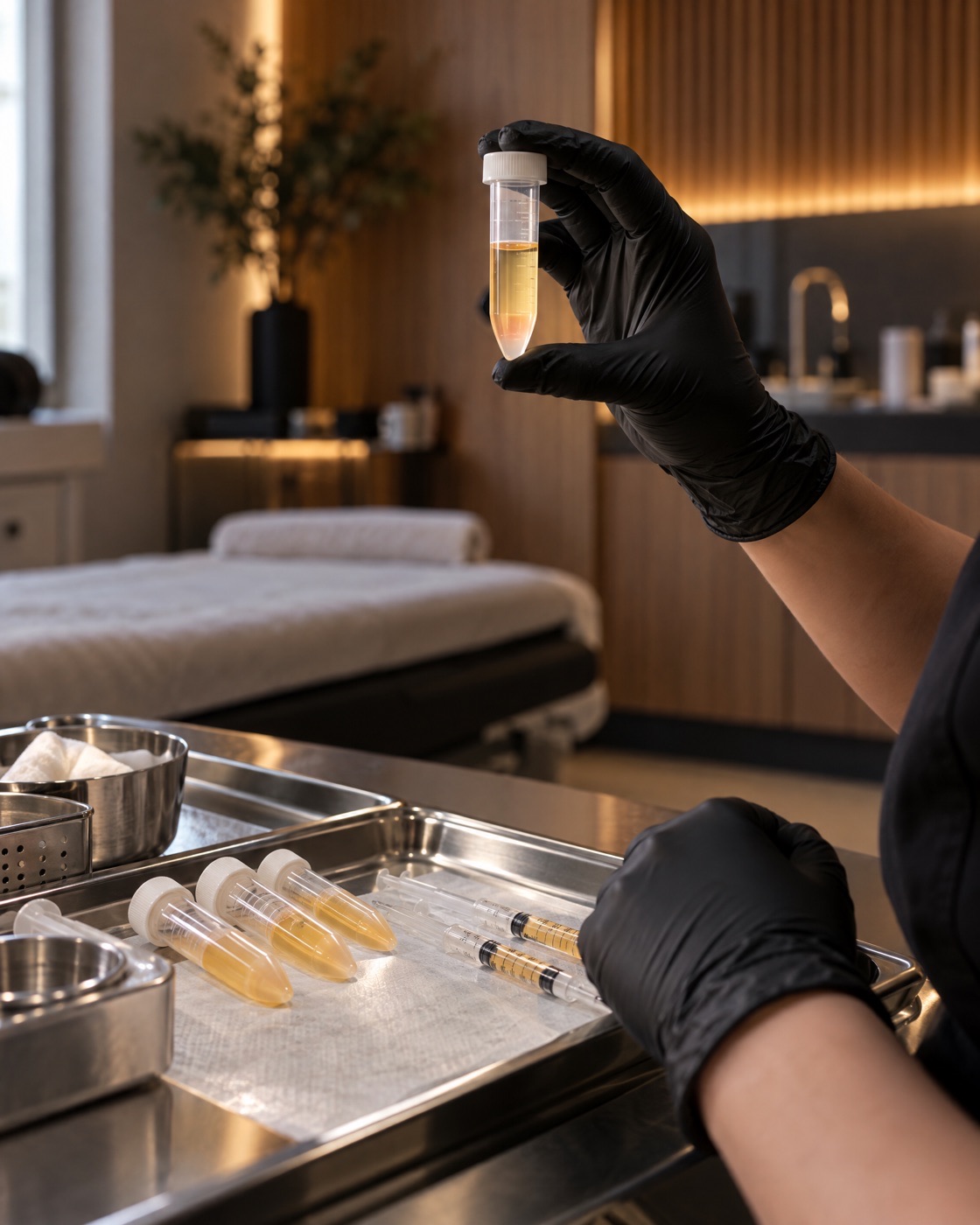
What it is
SVF (Stromal Vascular Fraction) is a cell fraction obtained from the patient's own adipose tissue and used in regenerative medicine. Adipose tissue is not merely a fat store, but a biologically active tissue containing numerous types of cells involved in vascularisation, repair and tissue remodelling. SVF makes it possible to use some of these components in an autologous cell fraction, derived from the patient's own body.
SVF is not a single type of cell and should not be confused with a stem cell culture. It is a complex mixture of cells present in adipose tissue, which may include adipose-derived stromal and progenitor cells, endothelial cells and endothelial progenitors, pericytes, fibroblasts, macrophages and other cells of the immune system.
One of the mechanisms studied is paracrine signalling, through which cells communicate with the surrounding tissues by means of biologically active molecules. Research describes several potential mechanisms: angiogenesis (support for the microvasculature), tissue remodelling, regenerative signalling (the release of growth factors, cytokines and other molecules) and immunomodulation of the local inflammatory response. The aim is to support the biological environment in which the tissue repairs and remodels itself.
- improving the quality and structure of the skin
- certain post-operative or post-traumatic scars
- atrophic scars, including post-acne scars
- supporting the processes of healing and tissue remodelling
- combination with lipofilling
- surgical procedures in which the aim is to optimise tissue quality
- protocols combined with certain laser treatments
How it works
- 01
Harvesting
A quantity of the patient's own adipose tissue is harvested through a lipoaspiration procedure.
- 02
Processing
The harvested adipose tissue is processed to obtain the stromal vascular fraction.
- 03
Use
SVF is used in the area for which there is a medical indication.
Good to know
- The clinical data on SVF are promising, but the level of evidence differs according to the indication.
- Published studies use different methods of preparation and administration, patient groups are sometimes small, and protocols are not yet uniformly standardised.
- SVF is not a universal solution and does not guarantee tissue regeneration.
- Patient selection, the correct indication and the integration of SVF into an individualised treatment plan are essential.
- The indication, the method and any combination with other procedures are decided individually, by the doctor, after a consultation.
- This information is general in nature and does not replace a medical consultation.
Appointments are made by phone only, Monday to Friday, between 10:00 and 18:00.