Derma V
Laser platform with two wavelengths, 532 nm and 1064 nm, used for vascular and pigmented lesions.
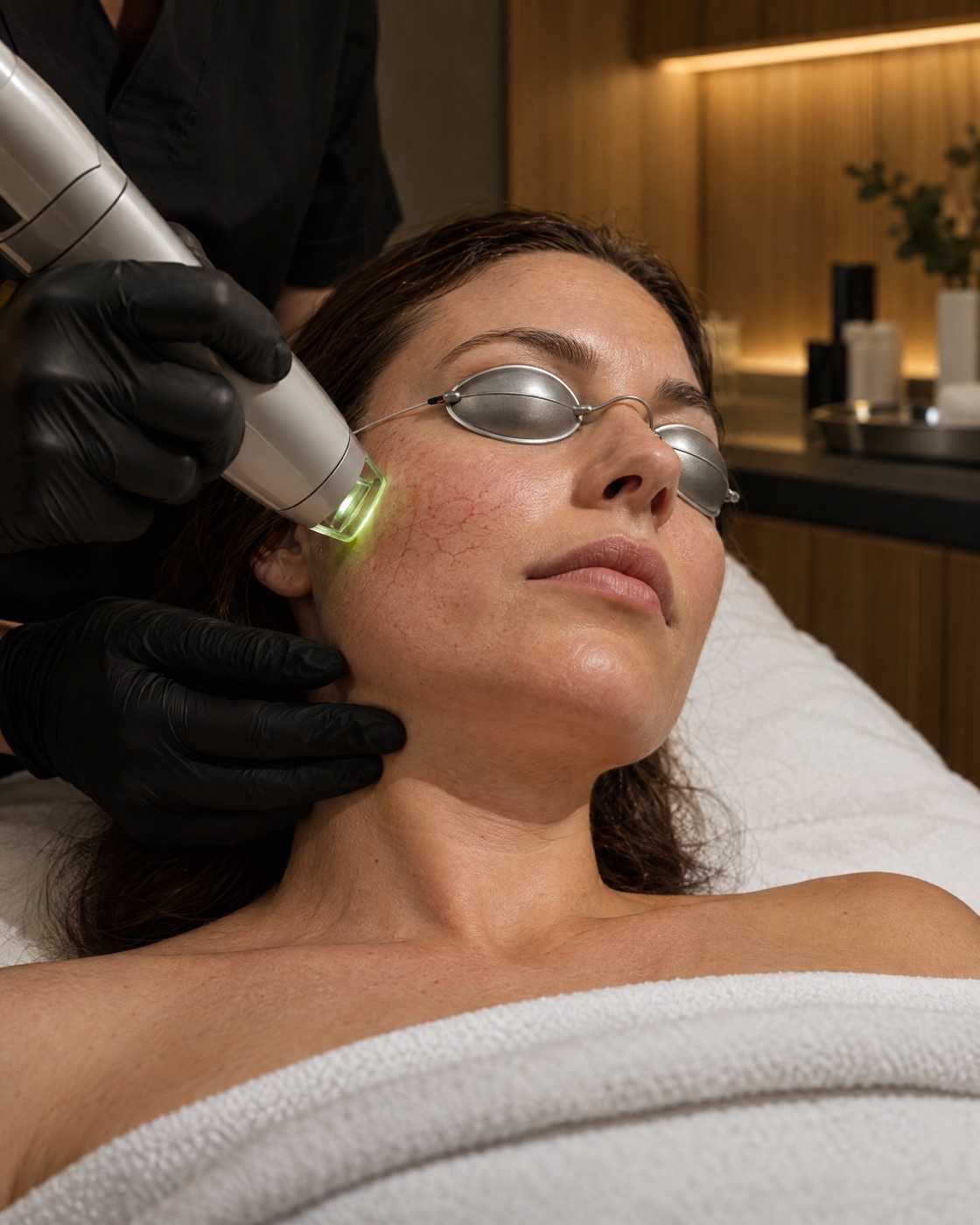
What it is
Derma V is a dual laser platform that uses the 532 nm (KTP) wavelength and the 1064 nm (Nd:YAG) wavelength with long pulses. The treatment mainly targets structures containing red and brown pigment, which is why it is used for vascular and pigmented lesions on the face, neck, décolletage and limbs.
The device has a skin cooling system (ICD), IntelliTrack technology with variable sequential pulses, and a sensor that measures temperature in real time. On the handpiece, an LED changes colour according to intensity and pressure. The treatment plan is set by the dermatologist, after a prior consultation, according to each condition.
- Vascular lesions, including on the legs
- Pigmented spots
- Port-wine stains
- Café-au-lait spots
- Melasma
- Rosacea
- Telangiectasia
- Venous lakes
Good to know
- Some patients may feel slight discomfort, which varies according to skin type, sensitivity and the area treated.
- Skin cooling and temperature sensors are used for patient comfort.
- Mild erythema may appear after treatment.
- Sun exposure should be avoided before and after treatment.
- After the procedure, a sunscreen with UVA and UVB protection is applied.
- The doctor's recommendations must be followed throughout the course of treatment.
Frequently asked questions
What other concerns can be addressed with Derma V?
In addition to vascular and pigmented lesions, the device is also used for wrinkles, enlarged pores, acne, post-surgical, hypertrophic and keloid scars, stretch marks, blackheads, poikiloderma and facial rejuvenation. The indication is established at the consultation.
What are port-wine stains?
Port-wine stains, also called naevus flammeus, are a congenital skin condition seen in both children and adults. They are red or purple in colour and can appear on various areas of the body, including the face.
What are café-au-lait spots?
They are common, flat skin lesions the colour of milky coffee, usually isolated. When they are numerous (more than 6) and of a certain size, they can indicate a possible diagnosis of neurofibromatosis type 1.
How to prepare for Derma V
Appointments are made by phone only, Monday to Friday, between 10:00 and 18:00.